What's New
- Website launched (trial operation)
Career
- Mar 1997
- Graduated from Osaka Prefectural Otemae High School (general course)
- Mar 2001
- B.Sc., Faculty of Science, Kyoto University
- 2002, 2003
- Research student, Nanjing Agricultural University, China (with Prof. Weixing Cao)
- Mar 2003
- M.Agr., Graduate School of Agriculture, Kyoto University
- Oct 2005
- Left the doctoral program, Graduate School of Agriculture, Kyoto University
- Nov 2005
- Assistant Professor, Experimental Farm, Graduate School of Agriculture, Kyoto University (until Mar 2016)
- Dec 2006 –
Jan 2007 - Trainee, International Institute of Tropical Agriculture (IITA), Nigeria
- Mar 2008
- Ph.D. (Agriculture), Kyoto University
- Apr 2013
- Visiting Associate Professor, Education and Research Center for Agricultural Cooperation, Nagoya University (until Mar 2014; also May 2018 – Mar 2019)
- Apr 2016
- Associate Professor, Institute of Agriculture, Tokyo University of Agriculture and Technology (until Mar 2024)
- Apr 2024
- Professor, Graduate School of Agriculture, Kyoto University (current)
Awards
- Mar 2013
- 17th Young Scientist Award, Crop Science Society of Japan
- Mar 2016
- 13th Paper Award, Crop Science Society of Japan
- Mar 2018
- 15th Paper Award, Crop Science Society of Japan
- Mar 2026
- 23rd Paper Award, Crop Science Society of Japan
Research
What is crop science?
Crop productivity depends heavily on which genotype is grown, in which environment, and how it is managed. We therefore need to understand these factors comprehensively, identify the problems in production fields, and work out their causes.
My aim is to develop technologies that raise productivity of major crops, especially rice, under a wide range of environmental conditions. I grow crops in Asia and Africa, identifying and overcoming problems on site.
Sustainable cropping systems for developing countries
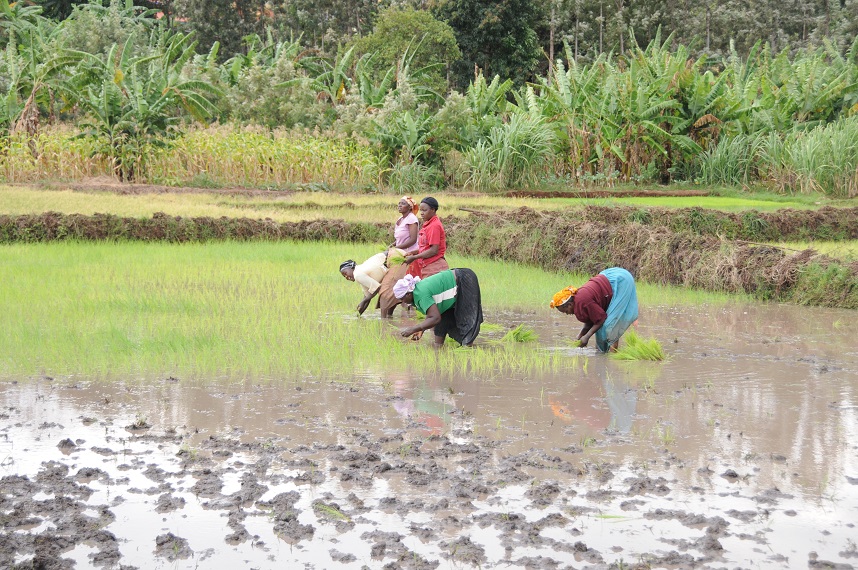
Food demand is increasing rapidly in developing countries with growing populations, yet crop productivity remains low in many regions. The factors that limit it vary by region: basic cultivation practices such as fertilization and sowing, the capacity of varieties, and environmental conditions such as water and soil.
I develop cropping systems that sustainably raise productivity and fit local production environments and farmers' circumstances. My main focus is on rice in Southeast Asia (Thailand, the Philippines, Indonesia, Vietnam and others) and China, in collaboration with research institutes and universities there. In Africa, I work in rice fields in Ghana, Kenya and Tanzania, aiming to establish cultivation techniques for stable high yields in diverse environments such as rainfed and large-scale paddies, and to propose breeding strategies. I also worked on a sustainable quinoa cropping system that makes the best use of local biological resources in the Bolivian Altiplano.
Applying data science to crop science
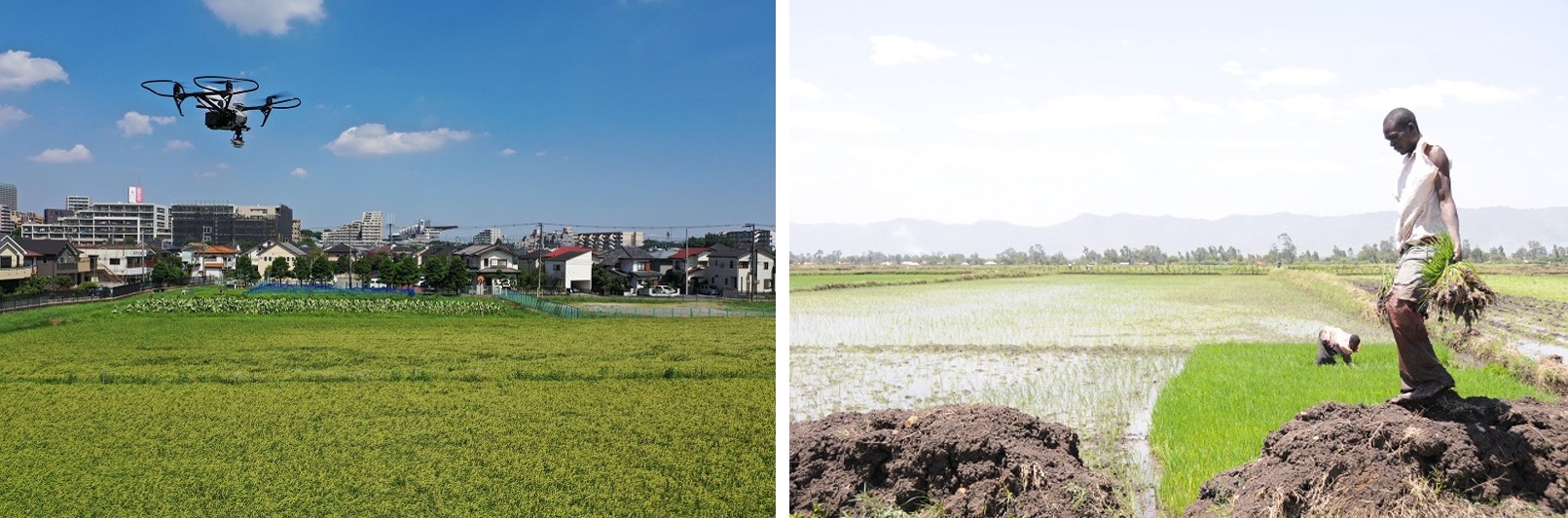
I combine crop science and data science to evaluate crop growth and yield accurately from images and sensor data, and to use the results for crop management and breeding. The work covers many kinds of fields, including those in Japan, and is also applied in developing countries. Smart agriculture is being developed actively mainly in Europe and North America, but is rarely introduced in developing countries, where appropriate crop management alone can raise productivity substantially. I aim to develop technologies that can be used in such regions too.
- Estimating growth and yield from drone and other images: developing methods to estimate crop growth and yield non-destructively from images taken by drones and smartphones, including data-collection methods that greatly reduce the harvest-survey effort needed to build models, and robust models that work across varieties and environments.
- Analysis with interpretable AI and machine learning: analyzing large datasets such as long-term field experiments with machine learning to clarify the factors that determine yield and their interactions, emphasizing models that are interpretable agronomically as well as accurate.
- Bilateral international collaboration with Germany: developing "trustworthy AI" for sustainable agriculture, supporting crop-management decisions with AI.
- International collaboration "Accelerating rice mutation breeding with remote sensing and interpretable AI" (e-ASIA Joint Research Program): together with partners in Thailand, Indonesia and the National Institutes for Quantum Science and Technology, we develop interpretable AI that identifies yield-limiting factors from time-series canopy images of rice, and combine it with genetic analysis to accelerate mutation breeding under climate change. We also aim to transfer image-analysis and machine-learning techniques to local researchers and build an international network for rice breeding.
Low-input crop cultivation
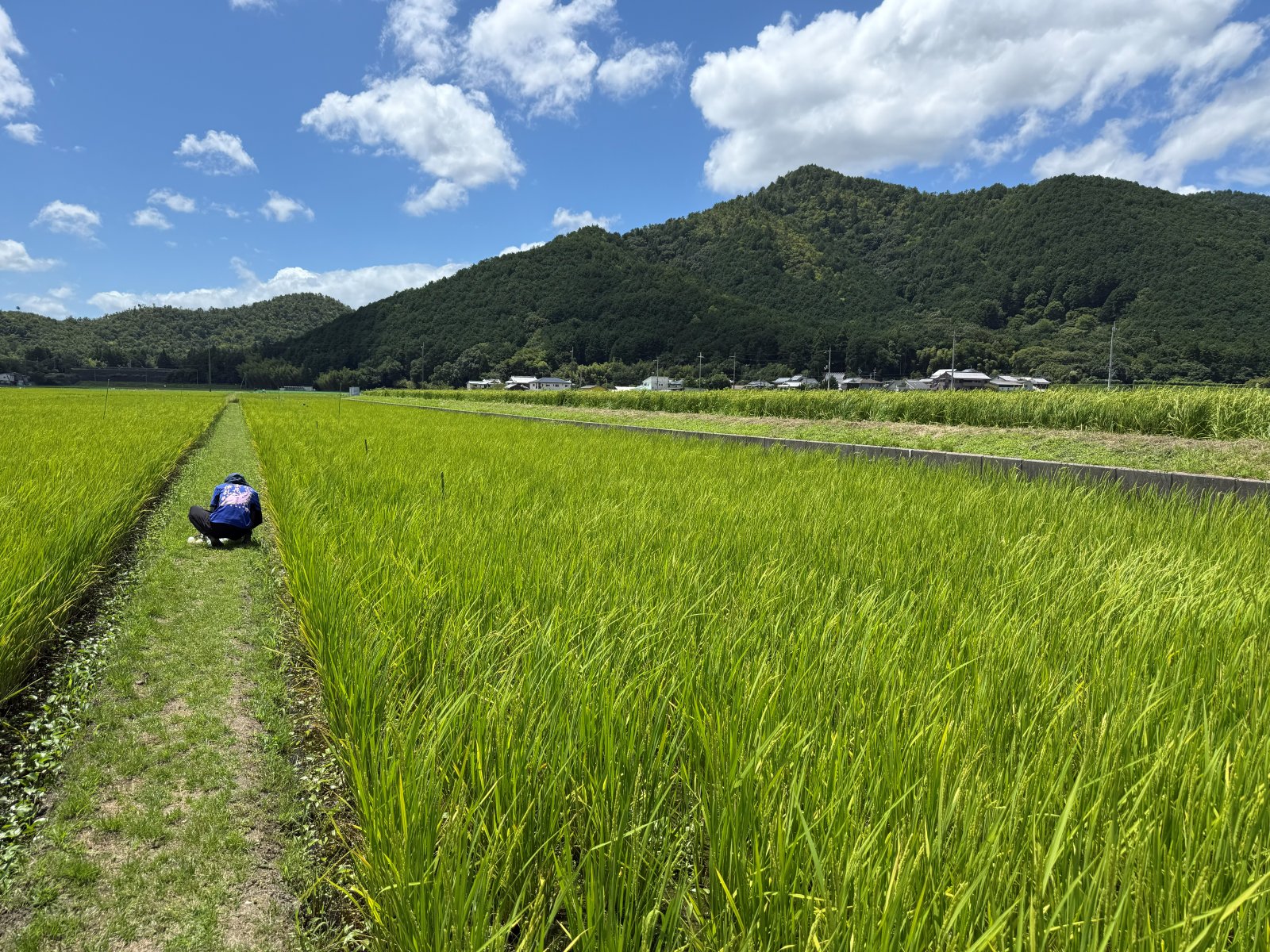
I develop cultivation techniques that maintain or increase yield while reducing inputs such as fertilizers and pesticides, aiming at sustainable crop production that is practical for farmers with limited resources in developing countries and has a small environmental footprint.
For example, in some "zero-input" paddy fields that receive no chemical fertilizer, pesticide or even organic matter, yields of about 70% of conventional cultivation have been maintained for decades. In such fields, I am trying to clarify how nutrient supply from irrigation water, rainfall, soil and microorganisms relates to rice growth, by combining precise field observation with data analysis. The photo shows a survey in an actual field.
Cultivation experiments for sustainable high yield
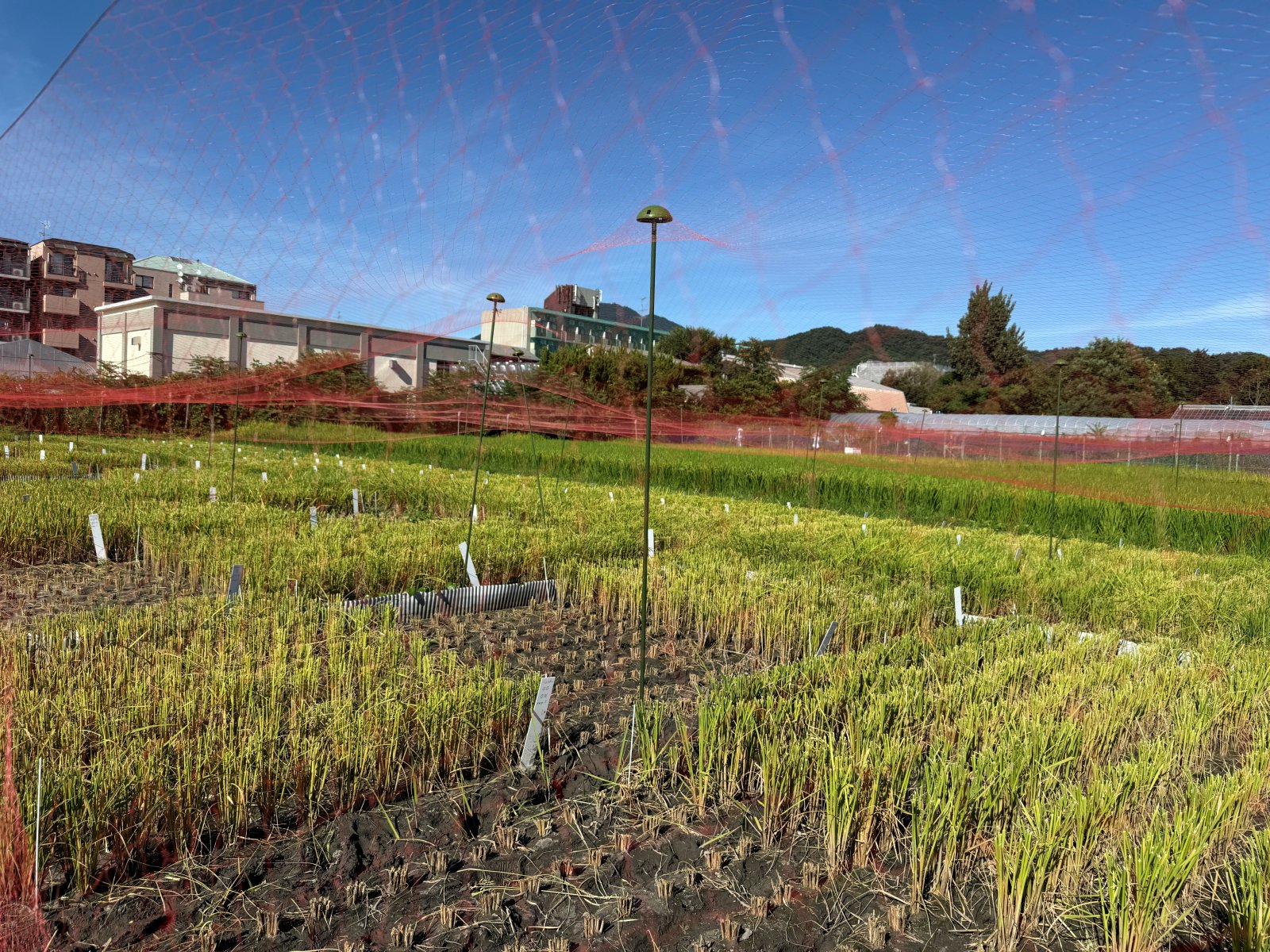
Steady cultivation experiments, the foundation of crop science, are another pillar of my research. I run field experiments combining variety, sowing or transplanting date, fertilization and water management, and examine yield and how it is determined. The data are used not only to improve cultivation techniques but also for the data analysis and modeling described above.
One example is ratoon rice, in which shoots regrowing from the stubble after the first harvest are grown to a second harvest. Because no second transplanting is needed, it saves labor. It is attracting attention as a low-cost, high-yield technique for large-scale farming and developing countries, and I am investigating the conditions that raise yield reliably. The photo shows a ratoon rice experimental field.
I also carry out cultivation experiments in various environments toward sustainable high yield.
Collaboration with the International Rice Research Institute (IRRI)
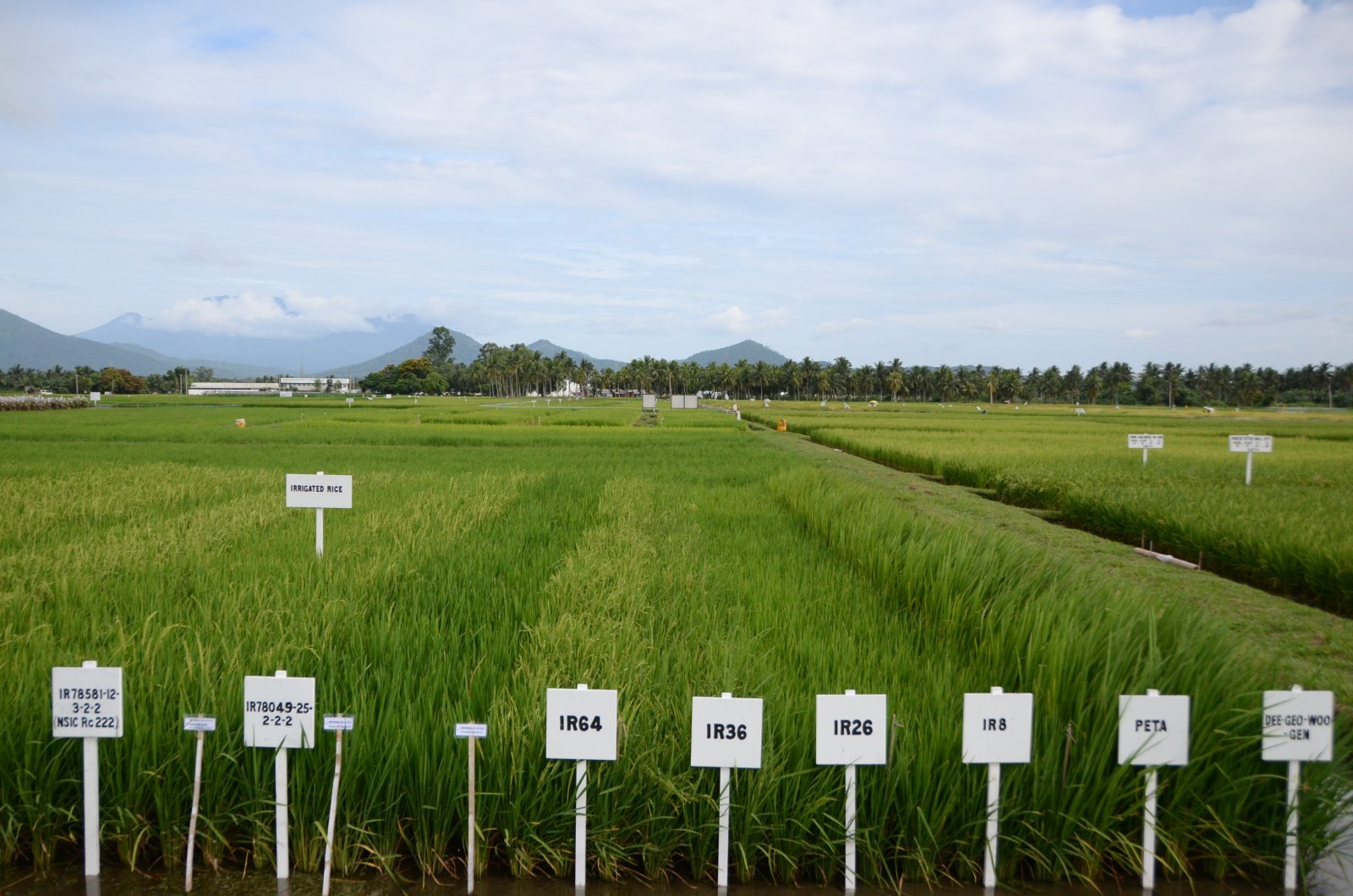
The International Rice Research Institute (IRRI, the Philippines) led the rice "Green Revolution" in the 1960s by releasing high-yielding varieties such as IR8, and continues to play a central role in rice research worldwide. Together with IRRI, I conduct research on the sustainability of rice production.
- Sustainability of rice cropping revealed by long-term continuous-cropping experiments: analyzing data from continuous-cropping paddy experiments running for half a century to identify the factors that sustain yield.
- Carbon sequestration and other aspects of sustainability: evaluating environmental sustainability, such as soil carbon sequestration under rice cropping.
- Effects of warming on rice production: predicting and evaluating yield changes under climate change.
Other
I also conduct a wide range of research on crop cultivation and physiology. For inquiries about collaboration, please see Contact.
Publications
The full list of original papers, reviews and books is on the publications page (Japanese page; titles and DOI links are in English where the original is).
Contact
Laboratory of Crop Science, Graduate School of Agriculture, Kyoto University
Kitashirakawa-Oiwake-cho, Sakyo-ku, Kyoto 606-8502, Japan
Email: katsura.keisuke.2a@kyoto-u.ac.jp
* To reduce spam, the "@" is written as a full-width character. Please replace it with a half-width "@" when writing to me.